
 By josecarlous775@gmail.com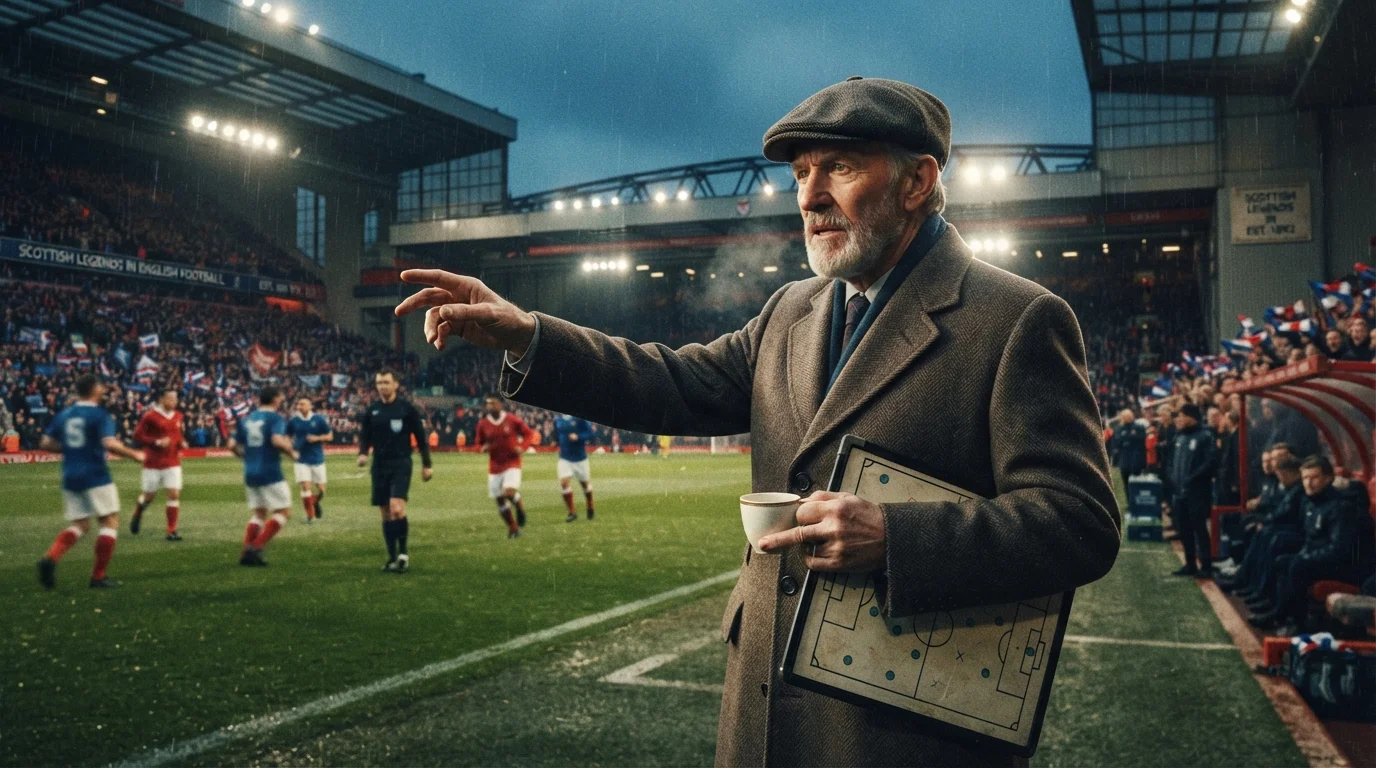
Draw up a list of the most successful managers in the history of English football and a remarkable number of them will have been born within a short distance of Glasgow. Matt Busby, Bill Shankly, Alex Ferguson, Kenny Dalglish and George Graham between them built some of the greatest sides the English game has seen, won title after title, and shaped two of its biggest clubs for generations.
For a country of Scotland’s size, that is an extraordinary record. It raises an obvious question, and the answer says a good deal about where these men came from.
Who were the great Scottish managers?
Matt Busby rebuilt Manchester United after the Second World War, then rebuilt it again after the Munich air disaster of 1958, and in 1968 led the club to the European Cup. Bill Shankly arrived at a Liverpool side in the Second Division in 1959 and turned it into the club that would dominate English and European football for the following two decades.
Alex Ferguson came to Manchester United in 1986 and stayed for more than twenty-six years, winning thirteen league titles. Kenny Dalglish won the league as Liverpool’s player-manager and later took Blackburn Rovers to the Premier League title in 1995. George Graham won two league titles with Arsenal and built one of the most famous defences in English football.
Five men, three clubs at the heart of the story, and a combined haul of honours that few nations could match.
Where did they come from?
This is the part that explains a great deal.
Shankly grew up in Glenbuck, a small coal-mining village in Ayrshire. Busby came from a mining community in Lanarkshire. Ferguson grew up in Govan, in the shadow of the Glasgow shipyards, where his father worked. They came from places built around hard physical work, close communities and a strong sense of shared purpose.
Those backgrounds shaped how they ran football clubs. All of them talked about the club as a family and a community rather than a business. All of them expected hard work as a basic condition, not a bonus. And all of them had seen at first hand what it meant for people to depend on each other, which is exactly what a football team has to do.
Why did Scotland produce so many coaches?
Part of the answer is simply how deeply football ran through Scottish working life.
In the industrial towns of the west of Scotland, football was not one pastime among many. It was the central thread of community life, played in every street and discussed in every workplace. Boys grew up absorbing the game constantly, and many of the best went south to play in England, where the money and the opportunities were greater.
That steady flow of Scottish players into English football created a pipeline. Players who had learned the game in Scotland spent their careers in England, understood both football cultures, and were well placed to move into management when they stopped playing.
What did their approach have in common?
Strip away the individual personalities and a clear pattern appears.
They built from the ground up. Shankly changed Liverpool’s training, its facilities and its culture before the trophies came. Busby put enormous faith in young players developed by the club. Ferguson rebuilt United’s youth system first and waited years for it to bear fruit. None of them looked for quick fixes.
They also demanded total loyalty and total effort, and they were ruthless when they did not get it. Players who crossed them did not stay long. That combination of warmth towards the club and toughness towards individuals ran through all of them.
How did they handle the media and the crowd?
With a sharp instinct for how to use both.
Shankly in particular understood that a manager could shape how supporters felt about their club through what he said. His lines are still quoted decades later, and they did a great deal to bind Liverpool’s crowd to the team. Ferguson used press conferences to protect his players, apply pressure to rivals and set the mood around a match.
That skill for communication, sometimes blunt and sometimes funny, gave these managers authority well beyond the dressing room. The supporters believed in them, which bought them time when results were slow to come.
Did any Scottish managers struggle in England?
Of course, and it is worth remembering that the list above is a list of the most successful.
Plenty of Scottish managers came south and failed, or had short spells that went nowhere. Jock Stein, one of the greatest managers in the history of the game after leading Celtic to the European Cup in 1967, managed Leeds United for only a matter of weeks before returning to Scotland to take charge of the national team. Success in one football culture never guaranteed it in another.
What the great ones shared was not their nationality alone. It was a particular mix of background, temperament and patience that happened, for a period, to come out of one part of Scotland in unusual concentration.
How did they treat young players?
With a faith that was unusual for their time, and it became one of their defining traits.
Busby built his great Manchester United side around teenagers from the club’s own youth system, a group so closely identified with youth that they became known as the Busby Babes. Decades later, Ferguson did something similar, bringing through a generation of home-grown players who went on to win almost everything. Both men believed that players who grew up at a club understood what it meant in a way signings rarely could.
That belief in youth was partly practical, since young players were cheaper, and partly a matter of principle. It connected the club to its community, which mattered deeply to managers who had come from close-knit places themselves.
Is the tradition still alive?
Less visibly than it was. Modern football management has become far more international, with coaches arriving in England from across Europe and beyond, and the old pipeline of Scottish players heading south has thinned.
But the influence of those managers is still everywhere. The clubs they built still carry their mark, in their training grounds, their youth academies, their traditions and the way their supporters think about what the club should stand for. That is a legacy few coaches of any nationality have matched.
Liverpool’s modern identity owes more to Shankly than to anyone, and our guide to what to check on cheap Liverpool kits looks at the shirt that grew out of it. For the oldest rivalry of all between the two football nations, our piece on England v Scotland, the oldest fixture in international football tells the story.
Frequently asked questions
Which Scottish managers won the league in England?
Among the most successful were Matt Busby and Alex Ferguson at Manchester United, Bill Shankly and Kenny Dalglish at Liverpool, George Graham at Arsenal and Dalglish again at Blackburn Rovers.
Why were so many great managers Scottish?
Football ran deeply through working-class life in the west of Scotland, and a steady flow of Scottish players into English football created a generation who understood both football cultures and moved into management.
How long did Alex Ferguson manage Manchester United?
More than twenty-six years, from 1986 to 2013, during which the club won thirteen league titles.
[…] piece on why Scottish managers thrived in English football looks at what Scottish football exported. The Old Firm is the part that stayed […]
[…] before buying one. For the Scots who made their names managing in England instead, our piece on why Scottish managers thrived in English football tells that […]