 By Callum Fraser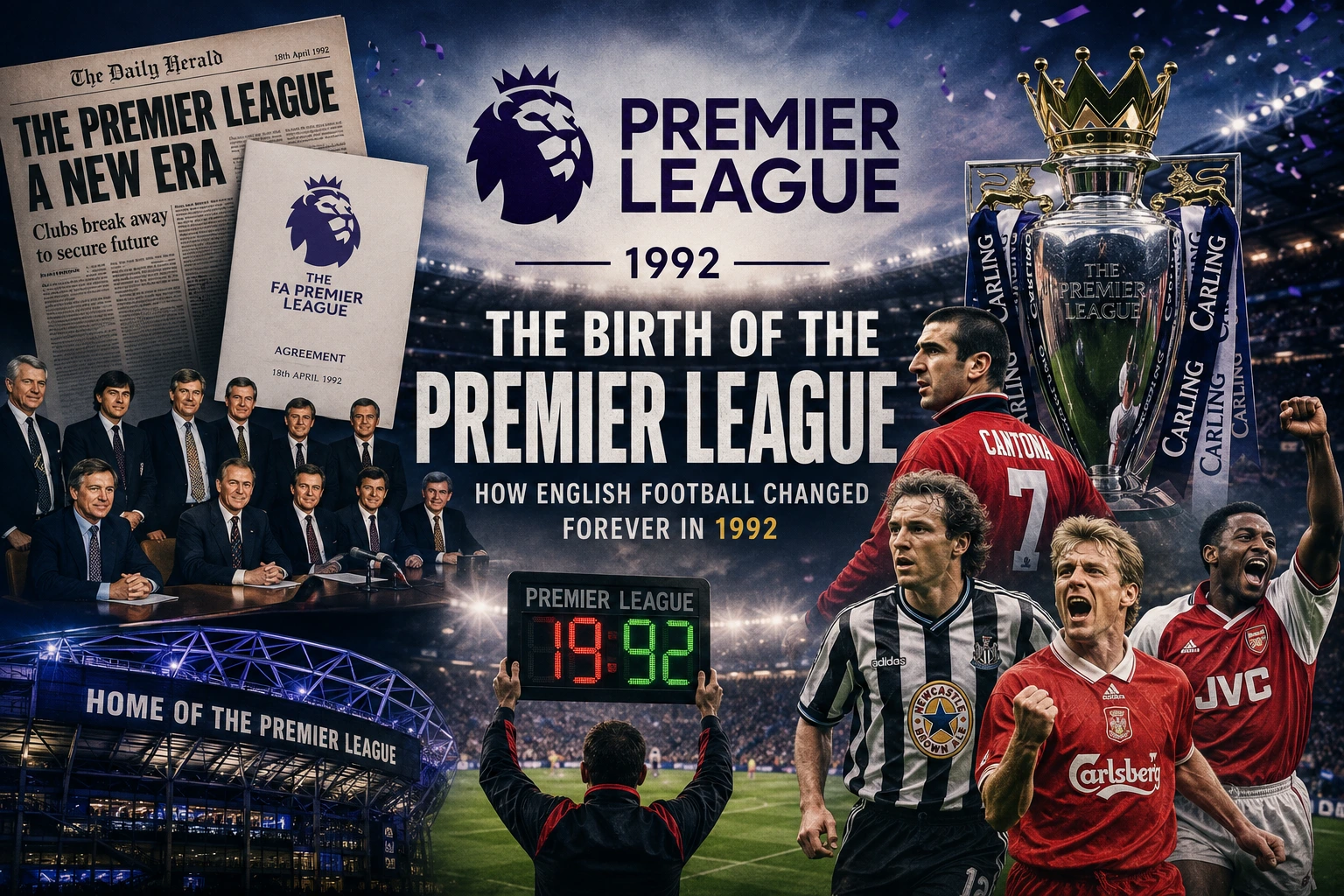
The Premier League is now one of the most watched football competitions in the world, attracting millions of supporters from across the globe. But the competition we know today began with a major transformation in English football more than three decades ago.
On 20 February 1992, the new Premier League was officially formed, with the first season beginning later that year. Twenty-two clubs took part in the inaugural campaign, creating a new era for the English game.
Why Was the Premier League Created?
Before 1992, England’s top division was known as the First Division and was governed by the Football League. During the late 1980s, English football was looking for ways to improve its commercial potential and compete with the growing popularity of football across Europe.
The leading clubs believed they could generate greater revenue by negotiating television rights independently. This eventually led to the creation of the Premier League as a separate competition from the Football League.
The change was not simply a new name. It represented a major shift in the way English football was organised, marketed and broadcast.
The First Premier League Season
The inaugural Premier League season kicked off in August 1992. The original 22 clubs included some of the biggest names in English football, such as Manchester United, Liverpool, Arsenal, Chelsea and Tottenham Hotspur.
Manchester United, managed by Sir Alex Ferguson, eventually became the first Premier League champions. Their success would prove to be the beginning of one of the most dominant periods in English football history.
The early Premier League years also featured legendary players who helped shape the competition’s identity. Eric Cantona, Alan Shearer, Ian Wright, Ryan Giggs and David Seaman were among the stars who became household names.
Television Changed Everything
One of the biggest differences between the old First Division and the new Premier League was the commercial power of television.
Live football became a major part of weekend entertainment, while improved broadcasting helped clubs reach audiences far beyond England. Over time, international television deals, sponsorships and commercial partnerships transformed the financial landscape of the game.
This increased investment allowed clubs to attract some of the world’s best players and managers, further increasing the league’s global appeal.
A Football Revolution
More than 30 years later, the Premier League has become much more than an English domestic competition. It is a global football brand followed by supporters on almost every continent.
The competition has changed dramatically since 1992, but its origins remain an important part of football history. The decision to create the Premier League transformed English football and laid the foundation for the modern game we watch today.
From its first season to the global spectacle it has become, the Premier League’s story is one of the most fascinating chapters in football history.