
 By Callum Fraser
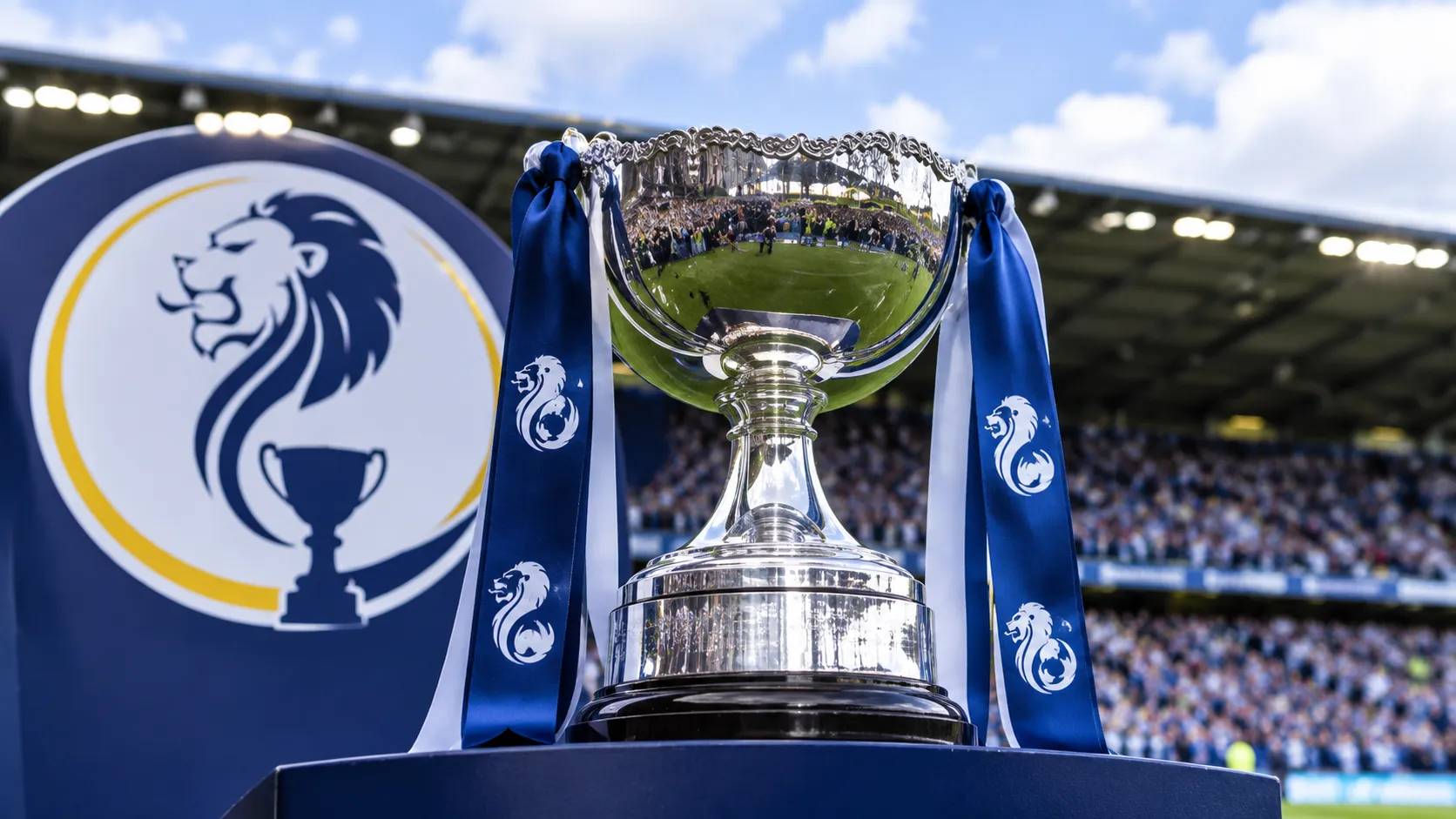
The Scottish League Cup explained properly takes a little longer than it should, because it is the competition that has changed format most often and currently runs in a shape that confuses even regular watchers. It starts in July, has a group stage, finishes before Christmas, and carries a sponsor name that has changed several times in the last two decades.
Underneath the format changes it does something genuinely useful: it gives every club in the country meaningful competitive football in July and a realistic chance of a tie worth a year’s income.
How the format works
The competition opens with a group stage in July, which is unusual for a knockout cup and deliberate. Clubs from the lower divisions are drawn into groups alongside Premiership sides that are not involved in European qualifying, with group winners and the best runners-up progressing.
From there it reverts to a straight knockout single-leg ties, no replays through to a final at Hampden Park. The whole thing is finished by the time the league season reaches its midpoint, which is the opposite of the English equivalent and makes the trophy the first available each season.
The SPFL publishes the current format and the draw procedure, which is worth checking rather than assuming because it has been adjusted more than once.
Why does it start in July?
Two reasons, both practical. The first is that Scottish clubs outside European competition have a long, empty summer and nothing competitive to play, so the group stage replaces a run of friendlies with matches that matter and that people will pay to watch.
The second is revenue distribution. A group stage guarantees every participating club a set number of home fixtures, which for a lower-division side is three or four paying gates in a month when it would otherwise have none. That is a deliberate redistribution mechanism dressed as a format change, and it works.
The cost is that the competition’s early rounds are played before squads are settled, which produces some strange results though given that strange results are the main reason anyone watches a cup competition, that is arguably a feature.
The sponsor name problem
The competition has been named after a succession of sponsors, and the name has changed often enough that supporters, broadcasters and journalists frequently use three different versions of it in the same conversation. Most people default to “the League Cup” regardless of what it is formally called.
This is worth knowing if you are searching for records or results, because archives are inconsistent about it. The same competition appears under several names depending on when the record was written, and the sponsor-free name is the only reliable search term.
It also makes the trophy harder to build a profile around, which is a real commercial problem for a competition already competing with the Scottish Cup for attention.
What is it actually worth?
Financially, a great deal to a small club and relatively little to a large one. For a lower-division side, a home tie against Celtic or Rangers is the single biggest payday available a full ground, a share of broadcast money, and a cup run that can fund a season.
For the Glasgow clubs the calculation is different. The prize money is modest against their overall income, so the value is in the trophy itself and in the European place that the winners have sometimes carried. That makes it the competition most likely to see a rotated side in the early rounds, which is exactly what creates the openings further down.
Sporting value varies by who you ask. For most clubs it is the most realistic trophy available, because the format is short, the Glasgow sides take it less seriously early on, and a single good night can put you in a semi-final.
The upsets, and why they happen
The same structural reasons that make the Scottish Cup unpredictable apply here and are amplified by the calendar. Single-leg ties with an unseeded draw, played in July when nobody’s fitness or shape is settled, on surfaces that vary enormously between grounds.
Add a rotated Premiership side against a lower-league team that has prepared for the fixture for a fortnight and treats it as the biggest match of its year, and the result is a competition with a long history of results nothing in the league table would predict. We go into the mechanics of this in why the Scottish Cup still produces upsets.
Does the winner get European football?
Sometimes, and the answer has changed more than once, which is why it causes confusion. At various points the League Cup winner has carried a place in European competition; at others it has not, with the places allocated purely on league position and the Scottish Cup.
The reason it moves is that UEFA’s allocation to Scotland shifts with the country’s coefficient, and when the number of places changes the national association has to decide where they go. A cup place is the first thing to be reassigned when the allocation shrinks.
The practical advice is to check the current season rather than assume, because a European place materially changes what the competition is worth to a club that could realistically win it and for a side outside Glasgow, that place is frequently the most achievable route into Europe available.
How it compares to the Scottish Cup
Different competitions doing different jobs. The Scottish Cup is older, open to clubs from well below the professional divisions, runs through the winter and carries considerably more prestige. The League Cup is restricted to league member clubs, runs in the first half of the season, and is finished before the Scottish Cup has properly started.
The practical difference for a supporter is timing. A League Cup run gives you a trophy in December and a semi-final at Hampden in the autumn; a Scottish Cup run gives you a day out in May. Most clubs would take either, and the smaller ones would take both.
For the broader structure the two sit inside, see the Scottish football pyramid. And for the club whose cup record outside Glasgow is the strongest, our piece on Aberdeen shirts and the Gothenburg era covers the period when the trophies went north.
What it means for supporters
Practically, it is the cheapest competitive football in the Scottish calendar and the easiest to get a ticket for. Group-stage games in July are lightly attended, inexpensive and often genuinely enjoyable pre-season football with something at stake, which is a better proposition than a friendly against a touring side.
It is also the competition where a smaller club’s supporters are most likely to see their side win something, or at least reach a Hampden semi-final. Across the competition’s history the trophy has been spread rather more widely than the league title, which for most of the country is the entire point.
The one complaint worth taking seriously is scheduling. A final before Christmas means the trophy is decided before most supporters feel the season has properly started, and group games in July clash with holidays. Both are consequences of the format solving a financial problem rather than a sporting one.
Frequently asked questions
When does the Scottish League Cup start?## Frequently asked questions
When does the Scottish League Cup start?
In July, with a group stage involving lower-division clubs and the Premiership sides not in European qualifying. It is the first trophy available each season.
Why does it have a group stage?
To guarantee lower-division clubs several home fixtures in a month when they would otherwise have none, and to replace meaningless summer friendlies with competitive football.
Where is the final played?
Hampden Park, and it is normally completed before Christmas rather than at the end of the season.
Why does the competition keep changing its name?
It is named after its sponsor, and the sponsor has changed several times. Most supporters and archives default to “the League Cup” regardless.